Showing posts with label rust proofing. Show all posts

Friday, August 9, 2019

Rustproofing - Worth the investment?


Rustproof

Rustproofing and undercoating your vehicle can protect it from corrosion and rust. This is especially important for the undercarriage of your vehicle, which commonly comes into contact with substances such as water, chemicals such as salt, and other dirt and debris from the road. Without some sort of protection, the bottom of your vehicle can rust and corrode, leading to part failure. Before rustproofing or undercoating your undercarriage, you need to consider a few things.


The advantages and disadvantages of rustproofing/undercoating your vehicle:

New Vehicle:  

The best time to rustproof or apply undercoating protection is when you buy a brand-new vehicle that hasn't been driven yet. Do what many folks in Northern Virginia have done, set an appointment at APS in Fairfax to have the service performed shortly after your purchase.


This represents the best time to have an undercoating applied, as the underbody of the vehicle is probably the cleanest it will ever be.

Used Vehicle

For used vehicles, rustproofing requires the expertise of professionals who must remove existing rust before the application of the rustproofing and undercoating. 

This applies most commonly to used vehicles. While the underside of the vehicle has already been exposed to water, dirt, and other debris from the road at this point, applying an undercoating now can protect it from further exposure.


Different types of rustproofing/undercoating

When having your vehicle rustproofed or an undercoating applied, you have a few options to choose from.

Electronic method. Using a weak electric current, this small device can stop the corroding effects of rust.

You can have these electronic devices installed at the dealership, or save some money and buy them from a source outside of the dealership.

The reviews on these devices are mixed.

Undercoating. This method involves spraying a tar-based substance on the exposed parts of a vehicle's underbody.


The tar-like undercoating acts as a barrier once it hardens, keeping out moisture, salt, and other substances.

This undercoating works best when applied to the undercarriage of a new vehicle. It also requires an expert application, or it can crack, letting in moisture.

Dripless oil spray. A wax-like substance applied to the entire body of the vehicle, it hardens once it has dried.

One of the downsides of dripless oil sprays is that you need to have holes drilled into the body of the car at specific points to make it useful. The spray also has a high viscosity, meaning that it does not always get into all of the nooks and crannies of your vehicle.

Drip oil spray. This is the most commonly recommended rust protection.

Drip oil sprays tend to continue to drip once applied until they dry. This dripping can last anywhere up to 48 hours after application.

Unlike the dripless varieties, the more watery nature of drip oil sprays means it gets into more areas on your vehicle, though you still need to have holes drilled in your vehicle's fenders, doors, and other areas to make sure that it gets to all the areas it needs to.


Tip: Use a tar-like undercoating for best results. A rubberized undercoating is more durable and seals better, protecting the metal from exposure to water.

While rustproofing is best applied when you first purchase a new vehicle, you can get undercoating protection for your used vehicle to keep it safe from further exposure to water, dirt, and other substances from the road. Check out a shop in Fairfax Virginia has an excellent process for rust remediation and protection


Tuesday, February 26, 2019

Undercoating & Rust Proofing

 What is the difference between Undercoating and Rust Proofing?

Simply put, undercoating protects the frame of your vehicle and rust proofing protects the body of your vehicle. Below we are going to walk you through each of the procedures so you can get a clear idea of what the purpose of each service is. Many people ask us which is the best protection for the potential corrosion due to winter road salt application, and we always recommend undercoating for this type of protection. It gives a solid protective barrier against any salt deposits and will greatly increase the life of your vehicle’s frame.

 Undercoating: WHY and HOW we do it.

Why: To have your car or truck undercoated means having a layer of protection sprayed onto the undercarriage of your vehicle, including the floorboards, wheel wells, and frame. Since the underside of your vehicle is not washed during regular maintenance and is not even rinsed by regular rainwater, it is important to protect the exposed parts from rust and corrosion.

How: Applying an undercoating the very first thing that we're going to do is clean the whole underside of your vehicle - remove all the road grime, road salt, mud, grease - anything that contributes corrosion. Then we'll put the vehicle on our four post drive on lift, put it up in the air and dry the underside of the vehicle with our high-pressure air system. Then we'll apply a thick coating of our abrasion-resistant undercoating to the underside of the vehicle, the floor pans, frame rails, rocker panels - everything on the underside of your vehicle that doesn't move or get hot (like your exhaust system, drive train or shocks).

 Rust Proofing: WHY and HOW we do it.

Why: Rust is a sneaky beast to deal with. We have all seen cars completely rusted out on the side of the road or abandoned in a ditch, and we can picture doors with huge holes rusted out with only a hint of original paint showing. The interesting thing is that rust actually starts to accumulate on a car very early in ownership, it is just hidden away inside the floor panels, inside the doors, and underneath the wheel wells so it is impossible to see. Once you start to see the first signs of rust, it has already been growing from the inside all along. When you realize where the rust starts, the solution is a no brainer.

How: To bake up a delicious batch of rust, you only three ingredients: Iron, water, and oxygen. Since we drive out in the elements all day in vehicles made of steel, we are creating the perfect environment for rust to form, grown, and eventually devour everything in its path.

Once you know how rust forms the solution is simple. The rust proofer we use is a type of extremely thick wax that can be sprayed onto surfaces or into tight spaces using a hose. By laying a thick durable wax coating inside the doors, the hood, and between the pinch welds of the frame we remove all three of the ingredients needed for rust to form. Oxygen can’t get to the iron ore in the steel and water and condensation are repelled away on contact.

We do not spray rust proofing on the underside of the vehicle. Since it is a waxy finish it makes an awful mess, dirt sticks to it, and your mechanic will be cursing your name if they need to get in there to repair something. Since the exposed areas of the vehicle are able to dry, unlike the inside of the panels, it is much less of a risk for rust.

If you'd like to protect your vehicle against corrosion - Undercoating and Rust Proofing are great options - reach out to Automotive Protection Services in Fairfax Virginia (703) 591 0900 


Wednesday, February 13, 2019

Detailing Tips: Winter Protection

http://apsrustandtint.com/services/detailing/
Detailing Tips:  Winter Protection 
During the winter season, our vehicles are the most susceptible to harsh conditions. The dirt and road salt that comes during this season can wreak havoc on the car’s exterior. A damaged paint finish is not only unattractive, but it can reduce the car’s value when you want to sell it or trade it in. As experts, we recommend that vehicle owners implement strategies that can prevent tire damage, rim damage, exterior paint, and body damage and undercarriage decay.

1) Regular vehicle washing
It is important that we regularly wash our vehicles during the winter season more so than any other time of the year. This is because the snow, slush, and grit combined with road salt make vehicles rust. Salt will prematurely degrade and damage sealants applied to the exterior. Hand wash and rinse the car, use a high-pressure sprayer to ensure all the grit and snow is removed. Clean the undercarriage, bumpers, wheel wells and other hard-to-reach areas that are likely to rust.

2) Seal the Paint
It is important to provide the exterior of your car with a protective coating to withstand the extreme winter conditions. A paint sealant is equipped with polymers that can shield your car against water and road salts. Salt, dirt, grime, and snow are easier to clean when your car is coated with a paint sealant. Additionally, the sealant will protect your vehicle from scratches and chips and reduces the damage caused by oxidation.

3) Remove Salt Stain from the Car Carpets
Always care for the carpets, seats, and floor mats during winter. Use a solution of half-distilled vinegar and half water to remove salt stains on floor mats, carpets, and seats. Use stiff brushes to loosen the dirt from the carpets and upholstery. It can take several scrubbing sessions to remove some salt stains completely. Salt stains on leather seats can be eliminated by the use of a conditioner that contains aloe.

4) Care for the Wheels
Just like there are protective sealants for car paint, there are specialized sealants for vehicle wheels as well. Protective tire sealants prevent brake dust adhesion and repel ice and snow from adhering to the treads. There are also nano-based ceramic glass coatings that can keep wheels safe from salt buildup, which comes with long-term consequences. Also, use specially mixed acid solutions to remove dirt, brake dust, and residue from wheels. Alternatively, we can use a nonacid product instead of acid-based cleaners since they cause oxidation on bare alloy wheels and can damage wheels with clear coatings.

Final Thoughts

While many car owners prefer to stay warm by the fireplace during the winter season, it is also nice to care for the car. Winter detailing will help avoid costly repairs while maintaining a car that is in good condition.

Tuesday, January 22, 2019

Questions and some misconsptions about, Undercoating

Questions customers ask us frequently: Undercoating


1 - Will undercoating void my warranty?
No, undercoating will not void your manufactures warranty. It's designed to work with your information
manufacturer's warranty, protecting critical parts like your frame and floor pan. Here is some additional
Automotive Protection Services - Fairfax
The vehicle receiving rust protection
2 -  How do you apply the undercoat?
- The very first thing that we do whenever we apply undercoating is clean the whole underside of the vehicle - we remove all dirt, mud, salt, chemicals, grease, everything that contributes to corrosion. Then we put the car up in the air using our four-post drive on lift. Once in the air, we dry the underside of the vehicle using our high-pressure air system. Then we remove the spare tire (if it's located under the vehicle). Then we mask off the parts of the vehicle that we're not spraying (exhaust system, drive shaft, shocks). Then we spray the whole vehicle with a thick coating of undercoating - frame rails, floor pans, rocker panels, wheel wells, etc. Then we set it aside and allow the chemical to properly cure.
Automotive Protection Services
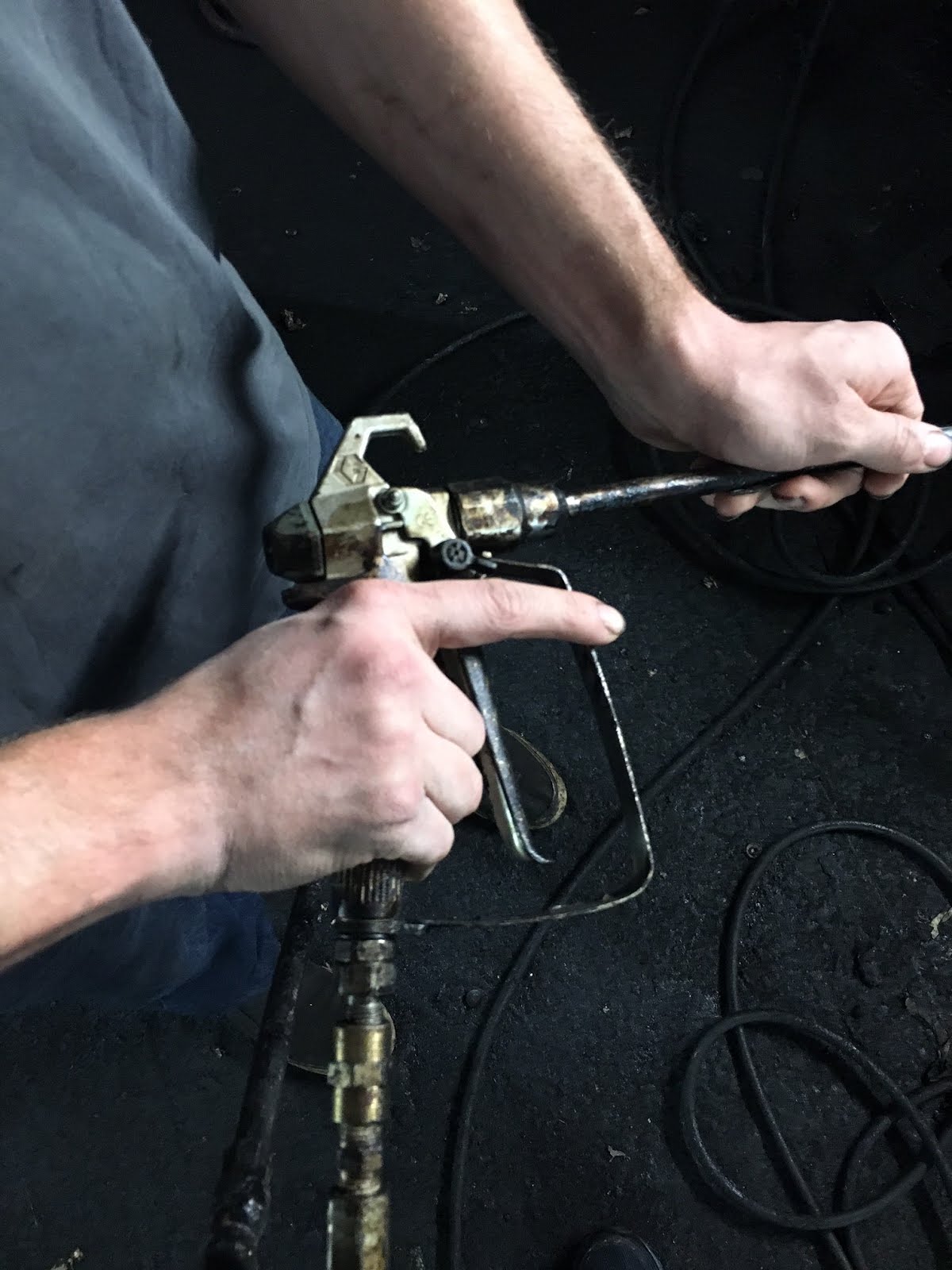
Gun used to apply Undercoating
3 - I've heard undercoating can cause rust - is that true?
No, undercoating does not cause the formation of rust. Rust a chemical reaction when iron (part of steel) oxidizes. Undercoating helps to prevent this from happening by creating a barrier between the metal and environment surrounding it.
4 - Cars and trucks don't rust anymore so I don't really need undercoating, do I?
False, Cars and trucks do rust, while automobile manufacturers have made great strides in reducing rust occurrences they've not eliminated them. See this link for more information  
5 - When should I get my vehicle undercoated?
The most cost-effective time to undercoat your vehicle is when it's brand new. Once your vehicle has shown signs of rust it will be most expensive to remediate.
6 - If my vehicle already has rust it's too late, isn't it?
No, it's not too late at all - we do have a process to remediate the rust - it involves the use grinders wire wheels, wire bristle brushes, and the use of a rust inhibiting chemical. The process works and can be an excellent option after the purchase of a pre-owned vehicle.
7 - I thought this was just something dealers use to pad their sale, but it doesn't really work, right?
It does work if it's applied correctly.
8 - What is undercoating made of?
The undercoating we use in this shop is manufactured by Noxudol - it's a solvent based product. The particulars of their product are a trade secrete.  
9 - Is there a warranty with this product/service.
Yes, We offer a ten-year warranty for qualifying vehicles - less than 36 months and 36,000 miles from the date of manufacturer.

10 - How much will undercoating cost for my vehicle?
Prices vary depending on the size, and condition - however, a typical new vehicle can be treated for between $400 - $500 

Don't let winter road salt ruin your ride

Cars Still Rust

Automotive Protection Services - Undercoating
The vehicle receiving Underbody rust remediation work
It's not unusual for folks to believe that modern cars are not susceptible to rust, but that's simply not the case. Steel can corrode, once exposed to water and air - and salt will accelerate that process. With the recent snow, V-DOT has been out on the roads aggressively treating to reduce ice and slippery conditions (a good thing to be sure) - but an unfortunate outcome is the corrosion all our vehicles will suffer as a result. 
AAA estimates that road De-Ices Cause $3billon in annual vehicle rust damage... 

Automotive Protection Services - Undercoating
Rusty Frame Rails 

There are steps that can be taken to reduce the risks and protect our vehicles. The first thing we should all do is clean off our vehicles, especially the undercarriage after driving in winter conditions. The pre-treatment, or brine, used in advance of winter weather is especially bad - it will remain active until removed - very effective at reducing ice, but can cause a lot of damage to our vehicles. 

Automotive Protection Services - Undercoating
A vehicle receiving undercarriage treatment 
The other thing we can do is have our vehicles professionally Undercoated and treated for rust damage at a reputable shop - like Automotive Protection Services in Fairfax Virginia. APS has been protecting vehicle owners cars against rust going back to 1979 as a family owned and operated business. Typical undercoating jobs run between $400 and $500 and come with a ten-year warranty on new vehicles. 

Within the past month, a customer from Maryland brought us a 2004 Expedition that was showing signs of rust damage. We have a process of rust remediation and treatment - but we quickly discovered that this truck was beyond our protection services, the frame was structurally compromised. While it's rare for us to see that much damage, it can and does happen. Unfortunately for the vehicle owner, there are few shops willing to work on it - none that we reached out to. 

With more snow in the forecast, we can be assured that V-DOT will be treating the roads, and this will contribute to more corrosion on our vehicles. Safety on the roads is the primary concern - protection of our vehicles is then up to us.

____________________________________________________________
Automotive Protection Services
3170 Draper Drive Unit #8
Fairfax, Va 22031
(703) 591 0900
Ian Sturdevant  (owner)


Automotive Protection Services provides several automotive protection and appearance services throughout the Mid-Atlantic region. From undercoating, rust proofing, spray-in-bed liners, to car detailing with paint sealants and Paint Protection Films along with our vehicle accessories shop, featuring brands like BAK and WeatherTech you are sure to find exactly what you need to keep your vehicle protected from the elements and staying showroom fresh for as long as you own it.

http://apsrustandtint.com/

Tuesday, September 19, 2017

Will my car rust?

Stated plainly, yes - cars rust. Manufacturers have improved their methods - and they do offer some limited warranties but ultimately rusting is inevitable - Just ask Mike Staples, who works as the undercoating and corrosion department head for Automotive Protection Services in Fairfax, Virginia. He sees cars and trucks of all makes come through his shop where he manages two drive on lifts doing rust remediation work, applying cavity wax and undercoat.

"We follow a simple process - clean the underside of the vehicle first - most folks know that salt will cause rust, but they forget that mud, dirt and road-grime  will also lead to rust on a frame rail and floor pan."

A young man, Mike's enthusiasm for his work comes through when he talks about it; "When I first started I really didn't know that much about cars, what makes them work, or what makes them fail - once you have the truck on the lift it's important to know where to scrap, where to spray undercoat and which areas to leave alone."

Not shy to dive head first into a difficult job which involves a lot of rust remediation work. Scrapping off flaking rust, with putty knives, and then grinding metal with a wire bristle brush isn't most folks ideas of good work - but Mike sees satisfaction in it. "I can see my labor when I'm done - my efforts have meaning."

Mike does wonder why more folks don't appreciate the value that his hard work can afford a car owner? "When I see a car come into our shop for an inspection that was undercoated 10 or 15 years ago, and the underside looks brand new - no rusting at all - I know that what I'm doing is protecting people's cars, I think Yeah- this stuff totally work - everyone should do it!"

Does your hard work, need to make you dirty? "I don't mind getting dirty - it's like a badge of honor - I've earned this dirt under my fingernails and on my face."

Indeed you have, Mike.

Section Page News - Automotive News